What Burnham’s rule could mean for the UK
Not yet elected, the new MP for Makerfield, Andy Burnham, is seen as a shoo-in as our new Prime Minister. A politician with the success of growth in Manchester and his ‘man of the people’ persona, he is the very antithesis of Sir Keir Starmer.
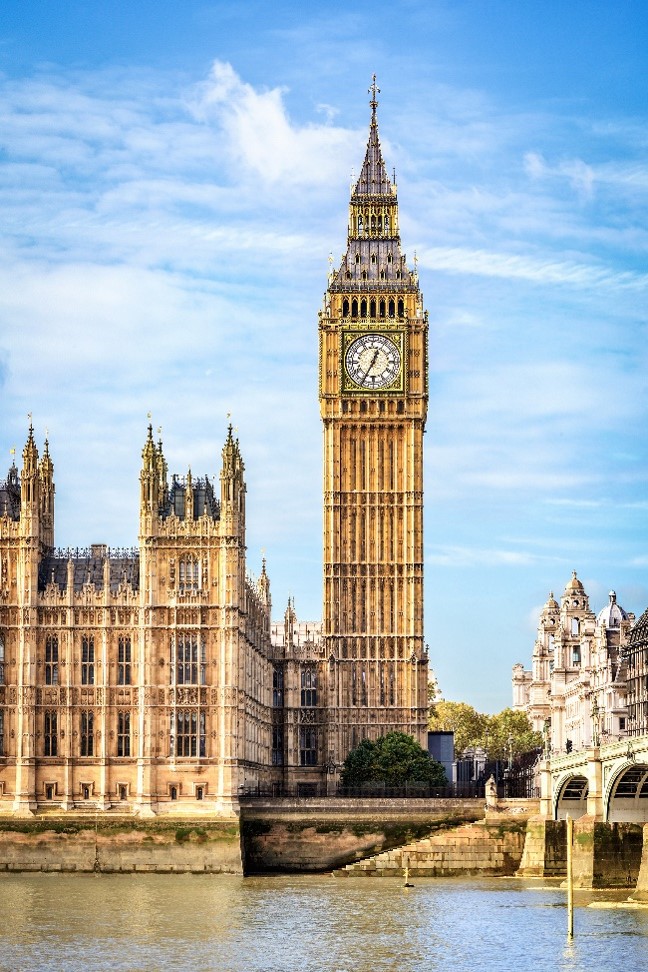
After months of Labour Party pressure, a failing public image and a series of policy rollbacks, Sir Keir Starmer resigned as Prime Minister and opened the door for a so-far uncontested Mr Burnham to take leadership.
So far, there has been a lack of detail on policies, save that he will follow the Labour Manifesto. Perhaps this is unsurprising as he is still officially in a Labour leadership campaign, but past statements and his Manchester policies point to what he might want to achieve.
The most important commitment Mr Burnham had made so far was his pledge to pursue electoral reform after the next election with a form of proportional representation, perhaps based on the transferable vote system found in Northern Ireland.
The financial market’s view
Whoever is Prime Minister will find that the same fiscal rules, which Mr Burnham has undertaken to follow, leave limited options for increased spending.
Usually, as Prime Ministers resign, the foreign exchange and bond markets react unfavourably, especially if they view the next incumbent as bad for business. So far, the bond markets have not reacted to a Prime Minister Burnham, a sign that the City of London is willing to give him a chance,
In part, the City and the markets have given him a chance because his unofficial economic advisers have big reputations. Andy Haldane, the former Bank of England chief economist and Lord Jim O’Neill, a former Goldman Sachs chief economist, have stepped up to help him.
He has also backtracked on his more controversial statements, such as when he told the New Statesman in September 2025 that, “We’ve got to get beyond this thing of being in hock to the bond markets.”
Two days later he told the FT, “People have deliberately misinterpreted my comments about the bond markets.”
Policies
While Mr Burnham has floated policy ideas, his detractors who know him have called him a ‘weathervane’ and ‘conflict-averse’ and the new ideas may simply disappear.
“Andy wants to be loved and avoids making difficult decisions,” said one.
Devolution
He has been vigorous in his support of devolution and plans to set up a new ‘devolution department’ in Manchester, along with a ‘Northern No 10’. Its aims are to boost regional growth and shift power out of London and Whitehall.
He is also thought to be considering breaking up the Treasury despite warnings that this would lead to huge disruption, requiring staff to apply for new jobs.
This devolution of decision-making will also see capital spending diverted from the south-east.
He points to the success of the decisions he made as mayor in Manchester that saw the city produce twice the growth rate as the rest of the country, along with housing and transportation improvements. He aims to use the same model for housing strategy, direct housing investment funding and coordinated affordable housing programmes elsewhere in the UK.
On the other hand, most economists who have studied the impact of devolution have not identified any significant increase in overall economic growth rates in Scotland, Wales and Northern Ireland over the past 25 years.
Small businesses and pubs
Mr Burnham has called some of Labour’s policies on small businesses ill-considered. He has touted a cut to business rates for pubs and music venues of 20%. Certain small family-owned businesses, such as cafes and shops, could see rates abolished altogether.
These policies would be paid for through higher levies on warehousing giants such as Amazon.
Pensions
Although there are signs that he might look at cutting some social security bills, he has promised to leave the ‘triple lock’ on the state pension in place.
After years of supporting the £10.5 billion compensation for the Waspi women, those born in the 1950s who lost thousands of pounds each after not being properly informed of a rise in the state pension age, he has backtracked and ruled it out.
Young people and welfare spending
He has said that he will lower welfare spending, a policy that Lord Jim O’Neill believes is critical for growth rather than increasing taxes.
In particular, he supports the Milburn Review into young people’s employment outcomes. The 2026 Milburn Review by former Cabinet minister Alan Milburn warned that nearly one million young people (16–24) in the UK are Not in Education, Employment, or Training (NEET).
The review condemned this as a ‘record of failure’ and argued structural issues are trapping young people on benefits instead of helping them work, something that Mr Burnham has promised to rectify.
Taxes
Mr Burnham has confirmed manifesto commitments not to raise the rate of the three biggest taxes, but talking to the Daily Telegraph last year, he said there was ‘definitely a case’ to increase the additional rate of income tax to 50p, up from the current 45p.
He has also pushed the Chancellor, Rachel Reeves, to introduce a 10p band for the lowest-paid workers. It currently stands at 20% on incomes between £12,571 and £50,270.
It is unlikely that Corporation Tax or employer National Insurance Contributions will be reduced.
Housing
The provision of housing seems to be a primary target for Mr Burnham, but it is social housing, rather than affordable homes, that he seems keen on.
He has floated a few ideas for financing, including shifting the government’s existing £39bn affordable housing programme entirely to council housing. Another is using the UK’s national wealth fund to provide seed funding to new regional banks, along with private investment, for a programme of new council homes
Additionally, revenue would be raised by shifting away from council tax to a land value tax. A land value tax is an annual levy on the market rental value of land.
His background
Andy Burnham, 56, has already lost twice in the run for the Labour leadership in 2010 and 2015. It followed stints in cabinet under Sir Tony Blair, where he was number two in the Treasury and as health secretary under Gordon Brown.
He has comfortably won three mayoral elections in Greater Manchester since 2017.
Britain’s yearly £44m health & safety violations bill
A new Freedom of Information (FOI) request has discovered that health and safety violations cost British employers over £44 million per year. The Health and Safety Executive (HSE) revealed that serious breaches have resulted in an increasing number of prosecutions between 2023 and 2025.
The figures show that between 2021 and 2025, the average annual fines to businesses averaged £44.1 million a year, with 2025 showing a slight decline to £40.9 million. In contrast, the number of serious breaches resulting in prosecution charges increased over the last three years, rising from 428 in 2023 to 446 in 2024 and 496 in 2025.
These numbers are expected to increase in 2026. Prosecution charges are brought against companies, owners and directors when an investigation is in the public interest and reveals a serious breach of regulations.
The FOI request came from Breathe HR, experts in human resource management and compliance supporting Small to Medium-sized Enterprises (SMEs). It warns that as costs continue to rise for small businesses, a health and safety violation could financially cripple a company.
Construction firms accounted for 38% of prosecution charges last year, the largest sector.
Phil Coxon, Managing Director at Breathe HR, said, “Reviewing health and safety policies and risks might not be the most glamorous task on employers’ to-do lists’, but our research shows it’s not something leaders can afford to overlook.”
Good health and safety policy
His company recommends several general steps that businesses should take to remain compliant.
- Create a health and safety policy, review it regularly and store it somewhere safe and easily accessible for employees.
- Appoint one clear ‘competent person’ responsible for health and safety overall. Ensure there’s clear day-to-day responsibility at each site or location.
- Complete suitable and sufficient risk assessments for all workplaces, sites and activities. Review them regularly.
- Be ready to show evidence of what you’ve done for audits, insurers or client requests. Keep accurate and contemporaneous records, including tracking incidents.
- Make sure employees know and understand the company’s policy on health and safety. Display a health and safety law poster at each working location.
- Carry out regular risk assessments and put controls in place to address hazards.
- As well as a well-thought-out first aid policy, be aware of employees’ well-being. Employers have a duty of care and must do everything they reasonably can to support health and wellbeing.
Other recommendations for specific risk can be found on the Breathe HR website. https://www.breathehr.com/en-gb/resources/health-and-safety-basics-a-checklist-for-smes