Updates for Companies House, smart meters become compulsory, and banks are chasing Covid bounce back loans
Today we give you the lowdown on the changes Companies House are introducing, explain how smart meters are becoming compulsory for small businesses, and give businesses the heads up that some banks are cracking down on unpaid bounce back loans from Covid.
Companies House brings the changes
Companies House has changed its login process and from December objections to a limited company being struck off must be made through its ‘Make an objection’ online service.
As of last month, all new users must use a GOV.UK One Login to find and update company information services.
For existing users with a registered account, their current login details will continue to work with the option found further down the login page. These account login details will have to be moved to the GOV.UK One Login system in the future and users will be told by Companies House when to do it.
A GOV.UK One Login allows the use of one email address and password to access many government services. To sign in, individuals will need an email address, password, and a second check (Multi‑Factor Authentication) using an authenticator app or SMS.
Shared Companies House accounts
If a business currently has a team sharing an account to access Companies House records, it should prepare for change. Each GOV.UK One Login must belong to one person.
To avoid problems, each person who needs access should create their own Companies House account linked to their own GOV.UK One Login. Sharing a single account after linking to GOV.UK One Login can trigger security checks that lock users out.
Objections
From 1 December 2026, objections to a limited company being struck off must be made through the ‘Make an objection’ online service and email objections will no longer be accepted. Companies House says this change will make submitting objections easier, quicker and more secure.
Compulsory smart meter roll-out for small businesses
The UK government has unveiled its comprehensive response to the consultation on the post-2025 rollout of smart meters for non-domestic sites.
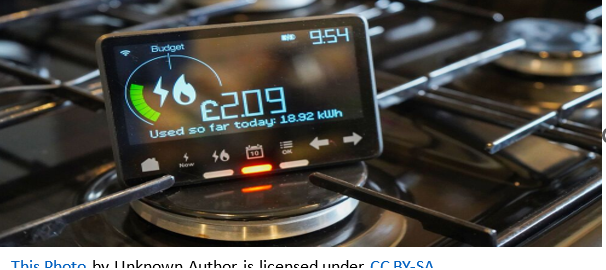
The initiative targets approximately three million smaller businesses and public sector locations across Great Britain, aiming to accelerate the adoption of smart meters as a cornerstone of the Clean Power 2030 Mission.
Smart meters are seen as vital for enabling a flexible, efficient power system, offering organisations real-time insights into their energy consumption. This helps businesses manage costs, identify savings and make informed decisions about tariffs and operational efficiency.
A key feature of the new framework is the introduction of smart-contingent contracts for non-domestic consumers.
Smart-contingent contracts are fixed-term non-domestic energy contracts (which are significantly cheaper than alternatives) that require the installation of a smart meter. The consultation response, ‘Non-domestic smart meter rollout post-2025’, had noted a growing trend among energy suppliers to use such contracts to drive smart meter uptake, particularly among smaller organisations that have been slower to engage with the technology.
There were concerns about inconsistent implementation, including complex contract terms or unfair penalties if installations are delayed for reasons beyond the customer’s control.
To address these issues, the government proposes to standardise the rollout of smart-contingent contracts.
From January 2027, suppliers must begin communicating upcoming changes. By September 2027, all new fixed-term contracts for designated premises must include a smart meter installation clause. Suppliers will also be required to adhere to a legally binding consumer protection code, ensuring transparency, fairness, and flexibility – especially for customers facing financial difficulties or those needing additional works before installation.
The government’s policy package has been shaped by stakeholder engagement, with 46 responses received from energy suppliers, consumer groups, metering organisations and intermediaries.
Most stakeholders supported the government’s direction, recognising the need for regulatory intervention to protect consumers and drive consistent implementation. Some concerns were raised about the timelines for compliance and the complexity of managing installations, particularly during peak contract renewal periods. In response, the government has adjusted the implementation schedule to allow suppliers a full year to prepare.
An assessment accompanying the policy estimates significant net benefits, with anticipated smart meter uptake reaching 88% of non-domestic sites by 2030 and annual bill savings of up to £29 million.
New £100m AI procurement competition for UK firms
The Chancellor, John Healey, has launched the first set of procurement competitions under the new £100 million Sovereign AI R&D Procurement Scheme.
The government says the scheme has been designed to help innovative British startups compete on a level playing field, drive growth and improve public services. The move backs British Artificial Intelligence (AI) companies to develop solutions to some of the UK’s challenges. Initially, the government has identified four areas as ‘challenges’.
The first four competitions launched are:
- The NHS productivity challenge: Working with the Department of Health and Social Care, firms will develop AI systems that can automate workflows, coordinate care and support decision-making across health services, helping deliver the ambitions of the NHS 10 Year Health Plan while improving productivity and staff experience.
- Driving compute efficiency: Led by the Department for Business, Innovation, Science and Trade and ARIA’s Scaling Inference Lab, this challenge will support technologies that improve the efficiency of AI computing infrastructure, helping deliver the government’s ambition to significantly expand the UK’s public AI compute capacity while reducing costs for researchers and businesses.
- Integrate AI at pace across Defence mission environments: Working with the Ministry of Defence, firms will develop solutions that securely connect data and frontier AI capabilities across defence systems, strengthening operational effectiveness and supporting sovereign national security capabilities.
- Agent security and resilience testing: In partnership with the National Cyber Security Centre, this challenge will support technologies that help organisations understand, manage and mitigate the risks associated with increasingly capable AI agents, helping unlock the safe adoption of AI across the economy.
The focus is on technology that has moved beyond early research but needs the opportunity, funding and environment to prove what it can do.
Successful companies will also keep the intellectual property they create, allowing them to take those innovations beyond the pilot stage and develop commercial products for customers in the UK and around the world. They will work with government departments to develop demonstrator-stage technologies with the potential to scale up.
The Sovereign AI R&D Procurement Scheme is designed to be different from any previous government-backed unit, acting like a venture capital fund. Further competition challenges are expected to follow as the programme expands.
Consultations
Tax treatment of predevelopment costs
The government is consulting on the tax treatment of predevelopment costs. These are costs incurred in the early stages of an investment project before work begins. They can include costs to assess feasibility, obtain regulatory approvals and carry out preparatory activities.
The consultation follows the recent Supreme Court judgment in the case of Orsted West of Duddon Sands (UK) Ltd & others v HMRC [2026} UKSC 12, where the cost of preliminary studies and surveys relating to offshore wind farms did not qualify for Plant and Machinery capital allowances (PMA’s), as there was not a close enough connection between the expenditure and the plant provided.
The government believes that while the decision in the Orsted case was clear, there is still some uncertainty for businesses about how the judgment could impact the availability of capital allowances on wider predevelopment costs.
The consultation closes at midnight on 21 September 2026. Details can be found at https://www.gov.uk/government/consultations/tax-treatment-of-predevelopment-costs–2
Customs Modernisation call for evidence
In June 2026, HMRC launched a ‘Call for evidence on Customs Modernisation’. It seeks views on how international trade is evolving and what this means for customs processes in the UK and aims to identify where the current system works well, how it supports modern trade and what further improvements can be made.
The call for evidence closes at midnight on 15 September 2026. Taxpayers with questions should contact the customs modernisation team by email: . The call for evidence documents can be found here: https://www.gov.uk/government/calls-for-evidence/customs-modernisation
And in other news…
IP exit tax
The Financial Times has reported that the business secretary, Jonathan Reynolds, is seeking to quell rumours that the government is planning an ‘exit fee’ for businesses that move abroad after spinning out of UK universities.
The unofficial briefings from the Department for Business, Innovation, Science and Trade sought to rebuff a Sunday Times report that the government was planning an exit fee. The paper said that Lord Vallance, a former science minister and current chairman of Andy Burnham’s AI taskforce, was behind the move in an effort to stem the outflow of the UK’s valuable Intellectual Property (IP).
The idea was initially floated in 2024, in a report by academics at the London School of Economics and the Centre for the Analysis of Taxation who argued that an exit tax or levy should be based on the percentage of a company’s valuation if it sells or floats overseas.
The UK has seen an exodus of high-growth companies moving abroad and more than 2,000 spinouts have emerged from British universities since 2010.
Banks start to act on COVID bounce-back loans
Banks have begun legal action to regain the state-backed loans they administered during COVID. Starling Bank, Barclays and HSBC have filed winding-up petitions against nearly 70 companies that have defaulted on loans, reported the Financial Times.
It says that government pressure has pushed them to go after debtors, especially small businesses that appear to have been dormant for years or those that failed to file accounts.
At least £2.8 billion was lost through the business Bounce Back Loans aimed at supporting floundering businesses through COVID. Although administered by the high-street banks, the taxpayer underwrote the loans.
The UK Carbon Border Adjustment Mechanism (CBAM)
The UK CBAM will be introduced from 1 January 2027 and places a carbon price on highly traded, carbon-intensive products imported into the UK, ensuring a comparable carbon price to that paid by UK manufacturers.
HMRC have published guidance to enable businesses to check whether their goods are in scope, understand their record-keeping obligations and check whether they may need to register. To stay up to date, taxpayers should register with the CBAM mailing list by emailing: .
Government guidance on the Carbon Border Adjustment Mechanism can be found here: https://www.gov.uk/money/carbon-border-adjustment-mechanism