Interest rates hold at 3.75%, and new requirements for close companies
Today’s business news focuses on the latest interest rates and provides directors with the recent changes to Self Assessment reporting.
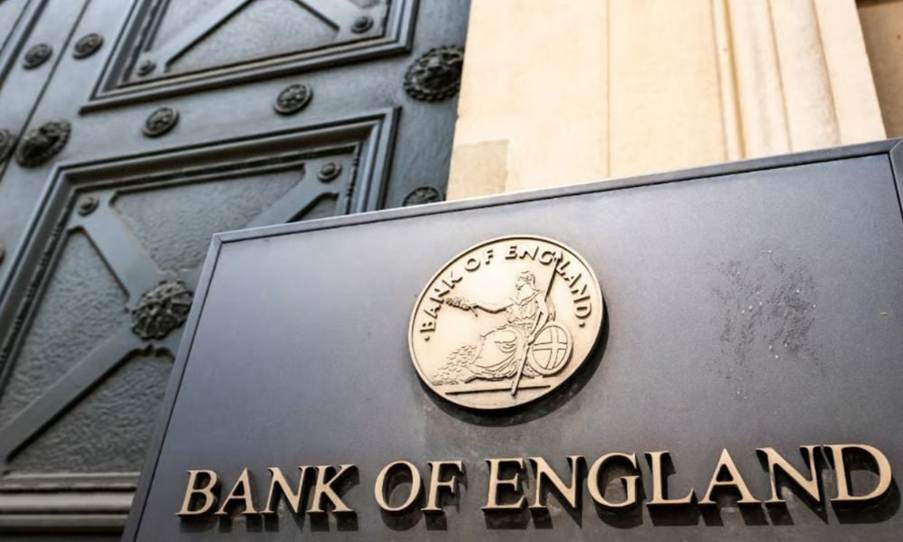
Bank of England holds interest rates at 3.75%
A split decision by the Bank of England’s nine-member Monetary Policy Committee has held interest rates at 3.75%. The 6-3 decision came in spite of the Office for National Statistics reporting UK inflation accelerating to 3.1% the day before. July’s inflation rate was 2.9%.
Rising fuel prices due to war in the Straits of Hormuz, along with US tariffs, have seen global pressures on prices, with the UK’s position exacerbated by poor domestic growth.
Businesses and homes have been put on notice by the Bank’s governor, Andrew Bailey. He warned that should inflation move towards 4%, the Bank was likely to change its position.
In a surprise move, the Bank also announced that it was suspending an expected sale of £488 billion of government debt. £120 billion would be held to back the Bank’s issuance of banknotes. Other gilts would be sold to the market at a slower rate.
The Bank of England’s decision came after the US Federal Reserve lifted borrowing costs for the first time since 2023.
Changes to Self Assessment reporting for directors
HMRC have clarified the position on Self Assessment tax return reporting requirements for directors of close companies and updated their guidance for directors of charities.
A close company is a company that is owned or controlled by a small number of people, usually five or fewer shareholders.
New requirements
Additional reporting requirements for directors of close companies came into force for Self Assessment returns from 2025-26 onwards. Those who are affected now need to report the following on their tax return:
- The name of the close company.
- The registered number of the close company.
- The amount of income they receive from dividends from that company in that tax year.
- The percentage of their shareholding.
Only close company directors who are currently required to complete a Self Assessment return need to report this information. However, the information must be provided even if the company is only a close company for part of the tax year.
Up until now it has been unclear whether directors who are unpaid or who are not shareholders of the company need to provide this information, and HMRC have now addressed this.
What have HMRC said?
HMRC have confirmed that when directors are unpaid and/or have zero shareholdings in the close company, they must still complete the new boxes on the tax return. Directors of dormant close companies must also complete the new boxes.
Where no dividend income has been received, or there is no shareholding, ‘0’ will need to be entered in the appropriate boxes.
However, directors of registered charities or Community Interest Companies do not need to complete the new boxes if they have not received, nor become entitled to receive, any employment income or dividend income. This includes any other type of distribution from that company or any connected company.
HMRC have highlighted that a £60 penalty may apply if the boxes on the tax return that are related to close companies are completed incorrectly.
If you need any help with completing your tax return, or are unsure whether these requirements apply to you, please get in touch. We’d be happy to help you.
Update on UK VAT refunds for non-UK businesses
HMRC have updated guidance on UK VAT refunds for non-UK businesses in a VAT group. Revenue & Customs Brief 10 (2026) explains changes to how non-UK businesses in a VAT group should make future UK VAT refund claims and the transitional arrangements. It also explains how to ask HMRC to reconsider claims made since 1 January 2021 that have been refused.
The issue
Non-UK businesses can use the overseas VAT refund scheme to claim back UK VAT if they meet the scheme conditions. Before Brexit, businesses established outside the EU had to submit claims through the VAT group’s representative member, even if that representative member had not incurred the UK VAT.
In some circumstances, businesses established in the EU could submit claims in their own name.
Since 1 January 2021, all non-UK businesses that were members of a VAT group have had to submit claims through the group representative member.
As a result, some EU VAT group members were no longer able to submit claims in their own name. This meant that in some cases, such as where the representative member was registered for VAT in the UK, the business that incurred the UK VAT was unable to claim a refund.
This was an unintended consequence of the UK’s exit from the EU.
The solution
The current changes will allow all eligible non-UK businesses to claim refunds of UK VAT in the same way, whether they are in the EU or elsewhere.
All non-UK businesses that are members of a VAT group can and must submit their own claim for any UK VAT they incur. HMRC will not accept claims from a representative member unless that representative member incurred the VAT.
As a transitional measure, HMRC will accept claims for VAT incurred between 1 July 2025 and 30 June 2026 (the 2025-26 prescribed year) from either:
- The individual VAT group member that incurred the VAT.
- Or the representative member of the VAT group.
The deadline for submitting claims for the 2025-26 prescribed year is 31 December 2026.
Reviewing rejected claims by HMRC
HMRC have said they will review claims for VAT incurred from 1 January 2021 that have previously been rejected because the representative member did not submit the claim, provided that the VAT was not included in a later claim.
If you have concerns over your VAT position or your tax position within a group, please get in contact. We are here to help you.